Two different propositions
Most weather app comparisons are between products doing the same thing slightly differently. This one is not.
Weather Underground is a weather platform whose distinguishing asset is a large network of privately owned weather stations — a substantial community of enthusiasts uploading readings from their own gardens and rooftops. Alongside that it has interactive radar, map overlays and severe weather features, in a free ad-supported version with paid tiers above it.
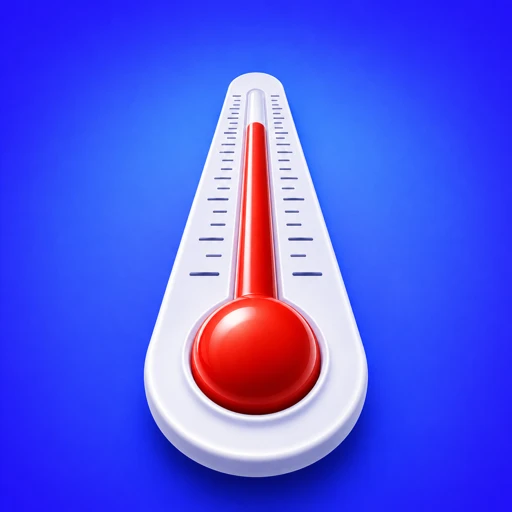
Thermometer takes Apple Weather's data for your location and presents it as an analog mercury instrument with numbered °C and °F scales side by side, in the app and in Home Screen widgets. That is the whole product.
So the comparison is not better or worse. It is whether you want a data network or an instrument.
What the station network is genuinely good for
Worth being clear about, because it is a real advantage and no forecast-derived app can replicate it.
Every consumer weather app that works from forecast data — including Thermometer, and including Apple Weather itself — reports an estimate for your coordinates, interpolated from observations that may be miles away. A personal weather station three streets from you is an actual measurement, three streets away.
On the nights when local differences are largest — clear, calm, frost-forming nights, exactly when precision matters most — that is a meaningful distinction. The reasons are in hyperlocal weather.
Two caveats, neither of them a criticism of the network:
- Siting decides quality. An amateur station on a south wall, above decking, or anywhere in sun reads high, sometimes by several degrees. A well-sited one is excellent. You cannot always tell which you are looking at.
- Coverage is uneven. Dense in some suburbs, absent in others. If nothing is near you, the advantage disappears.
Side by side
| Weather Underground | Thermometer | |
|---|---|---|
| Data | Own forecasts plus a personal station network | Apple Weather, via WeatherKit |
| Nearby real instruments | Yes, where stations exist | No |
| Radar and map overlays | Yes | No |
| Severe weather features | Yes | No |
| Temperature display | Numeral | Analog mercury dial |
| Both scales at once | No | Yes, numbered °C and °F |
| Advertising | In the free tier | None |
| Accounts | Available, and needed to contribute data | None |
| Analytics and tracking | See their privacy policy | None |
| Cost | Free with ads, paid tiers above | Free on the App Store |
Feature sets and pricing change, so check the App Store listing rather than trusting a comparison table's date.
Who should use which
Weather Underground if you want radar and maps, if severe weather alerts matter where you live, if there is a well-sited station near you, or if you run a station yourself and want to be part of the network.
Thermometer if what you check is the outdoor temperature, if you want it on the Home Screen without opening anything, if you want both scales visible at once, or if you would rather have no advertising and no account.
Both is a reasonable answer. They overlap barely at all.
The one thing worth knowing about privacy
Weather Underground is part of a larger weather business, supports advertising in its free tier, and offers accounts. Its data practices are set out in its own privacy policy, which is the right place to read them.
Thermometer has no account, no advertising SDK, no analytics and no third-party tracking. Your location is used to request the weather for where you are, and your unit and language choices stay on the device. That is a deliberate scope decision rather than a claim about anybody else.